

The Amber Coffee of Kumamoto: A Shop That Captivated Emperors and Authors

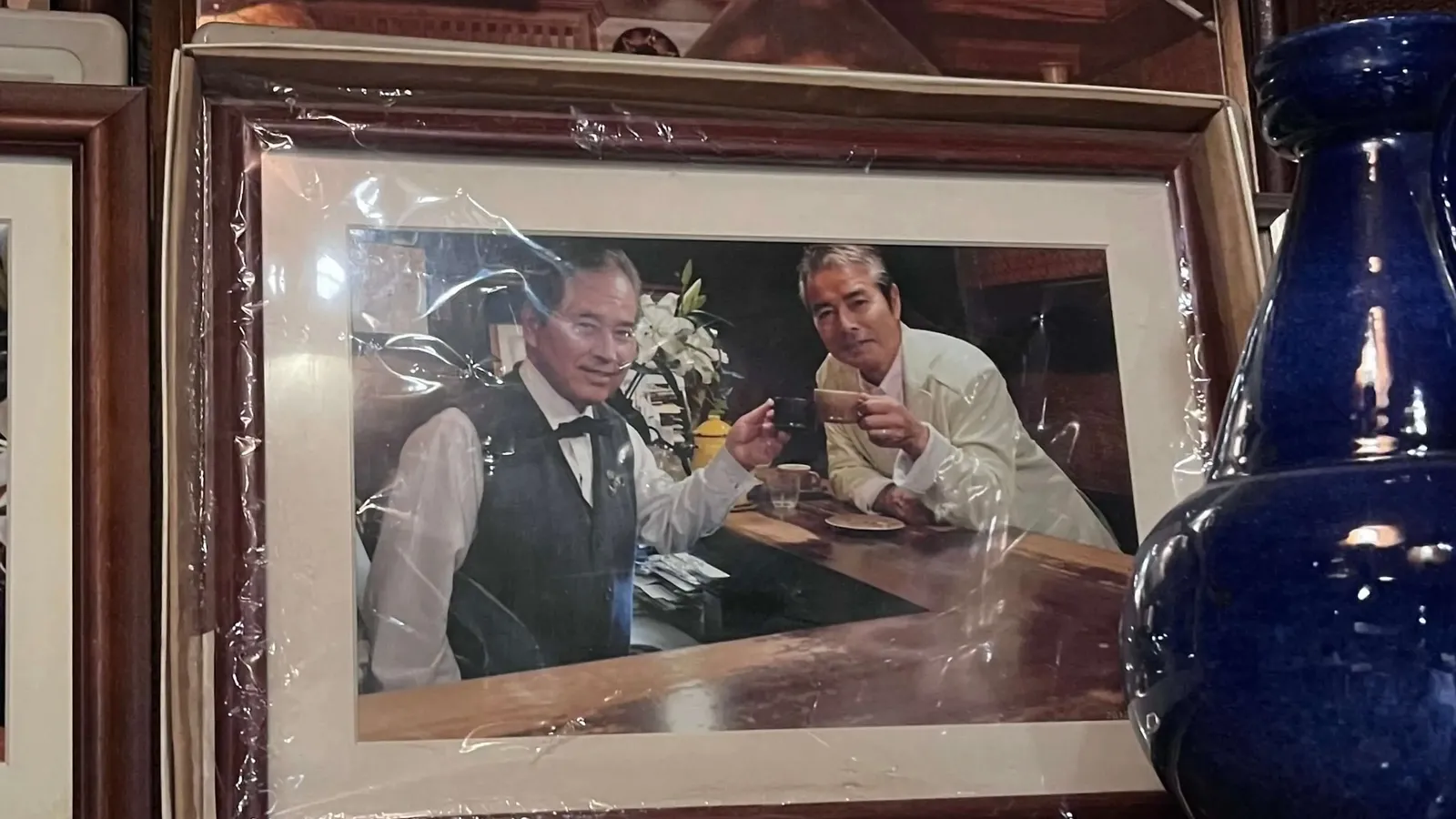
Walking toward Kumamoto Castle, I stumbled upon a small cafe called Arrow Coffee Kumamoto.
The interior was decorated in the classic Showa-era style, with soft piano music playing in the background. It only seats about six to eight people. On the side wall, numerous newspaper clippings were framed and displayed. I could tell immediately—this was a place with a story.

The Master and His Craft
The proprietor, an elderly gentleman, wore a plush vest and a neatly tied bowtie. He looked impeccably tidy. I’d seen photos of him before, sometimes wearing a small Kumamon pin.
Since it was already late afternoon and I was worried about sleeping, I didn’t want a strong black coffee. I just wanted something warm to drink. He looked at me and said: “I only serve one type of hand-poured coffee here. Even people who can’t usually drink coffee can enjoy it. If you can’t drink it, it’s free. A cup is only 500 Yen (about 25 RMB), and refills are on the house.”
Using translation apps didn’t reveal much, but I gathered that the shop opened in the 1960s and he is now over 80 years old. I later realized he might have been speaking the Kumamoto dialect—I wonder if Google only understands Tokyo Japanese?

A Coffee Unlike Any Other
I have truly never tasted anything like it. It didn’t have the typical bitterness or acidity of coffee; instead, it had a botanical fragrance. It tasted more like the sweet aftertaste of genmaicha (brown rice tea). The master explained that this was due to high-quality beans, Kumamoto’s pure water, and an extremely light roast. The liquid was almost transparent, which is why he calls it “Amber Coffee.”
With a touch of dramatic flair, he told me: “You won’t find a coffee this unique anywhere else in the world.” He seemed deeply passionate about ensuring his guests understood exactly what made his brew so special. Even when I didn’t immediately respond (I was still processing the translation), he patiently explained it over and over. His obsession and enthusiasm were palpable; he never sat down once during service.

A Legacy of Dedication
Local journalists who have interviewed him offer more details: when he first opened the shop, times were tough, but he was determined to perfect his unique flavor profile. Until about ten years ago, he worked from 11 AM to 11 PM every single day, year-round.
“It’s not good to take days off in the service industry,” he famously said. “It wouldn’t be right for guests who have traveled from afar to find the door closed.”
Legend has it that even the famous author Yukio Mishima, who was known for never drinking coffee, broke his rule here. Even the Japanese Emperor has visited this humble shop.
As I was leaving, I noticed some “merchandise” coffee bags designed for the master. Since the shop only accepts cash and I was at the end of my trip, I only had enough left for one bag. In my haste, I realized later that I’d accidentally bought coffee filters instead! Buying the master’s actual beans online from China would cost over 500 RMB.


Leave a comment
0