

The Three Treasures of Vietnam: Coffee, Banh Mi, and Motorbikes

When you first arrive in Vietnam, the local minibus is the cheapest way to get to the city center, costing less than 10 RMB.
The ticket lady insisted on charging for a seat for my luggage. It turns out luggage is charged separately—if it takes up a spot, you pay for a person. There’s no arguing with that.
The driver then gestured for me to sit on the storage box between the driver and passenger seats. Me: “Is it safe?” Driver: “OK!”
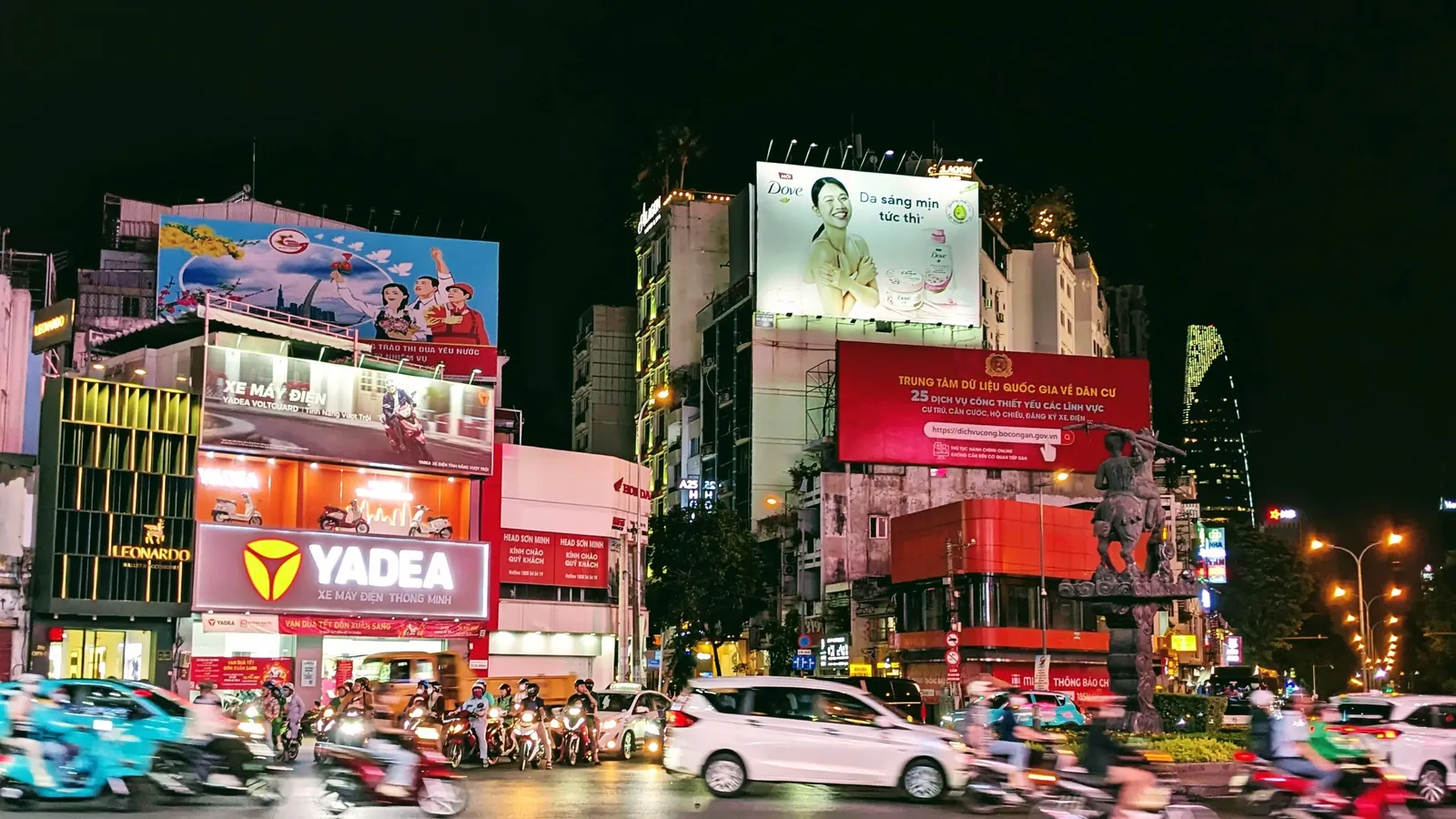
Amidst the chaotic but rhythmic traffic, I was swept into the endless bustle of Saigon at night. The air was a mix of motorbike exhaust, the scent of baguettes, and the aroma of Vietnamese coffee. Coming from the quiet Muslim town of Yogyakarta, arriving here felt like returning to the heart of the human world.
Motorbikes: The Pulse of the City
Whether in Indonesia or Vietnam, crossing the street feels like a high-stakes technical skill. Motorbikes often ignore traffic lights, so pedestrians must be hyper-aware of their surroundings to stay safe.
However, compared to Indonesia, motorbikes in Vietnam have an even stronger presence—there are more of them, they honk more frequently, and the riders are incredibly skilled. In the narrow, crowded streets of the city center, you’ll see people carrying everything from passengers to massive loads of cargo on two wheels.
Vietnam is a motorbike powerhouse. Statistics show that nearly every Vietnamese person owns a motorbike. On the streets, Japanese brands like Honda and Yamaha are everywhere, along with the local brand “SYM.”
Interestingly, the most famous Chinese brand here is Yadea. I read that they’ve already invested in a second factory this year, accelerating localization in R&D and supply chain. Their marketing is also aggressive; you can see large Yadea billboards and stores in prime locations like District 1.
For environmental reasons, Vietnam has proposed banning fuel-powered motorbikes in the city centers of Ho Chi Minh City and Hanoi by 2025 and 2030, respectively, slowly opening up the market for electric vehicles.
Banh Mi: More Than Just a Sandwich
I arrived in Vietnam on my first night around 8 PM and noticed a long queue of Grab riders outside a few eateries near the hostel. A closer look revealed they were selling “Banh Mi,” the Vietnamese baguette that every travel guide insists you must try.

To be honest, I didn’t come to Vietnam with high hopes for baguettes. I had bought them at Sam’s Club before—while the wheat aroma was strong, the texture was so dry it was hard to swallow, and cutting it felt like sawing wood. I had a bit of “baguette PTSD.”
But after trying it here, I realized I love the Vietnamese version, known as Banh Mi.
First, the bread: Vietnamese baguettes are lighter, warmer, and have an incredibly crispy outer crust. That first bite triggers a dopamine rush similar to eating fried food. The inside is soft, and when it meets the fillings and sauces, the texture is more like a perfect sandwich.
The fillings vary widely. While the French might typically have a slice of baguette with butter or jam and some side salad for breakfast, in Vietnam, the pairings are much more diverse. Cold meats seasoned with salt and black pepper, pickled daikon and carrots, cucumber, cilantro, mint, green papaya, and a squeeze of mayonnaise make the flavor as refreshing as any Southeast Asian dish.
The Vietnamese-American author Andrea Nguyen notes that there are differences between Banh Mi in the north and south.
“In the south, they live a more lavish lifestyle… so they add a lot of things—fresh herbs, vegetables, pickles—and the protein can be anything: chicken, meat, seafood, even pâté.”
And you can find more recipe frome Vice.
In Ho Chi Minh City, prices vary by vendor and portion size. For example, Banh Mi Huynh Hoa, which is consistently ranked as one of the top shops, has a clean indoor seating area and sells a “deluxe” version for about 19 RMB. Meanwhile, on the street corners, you’ll find women in conical hats selling Banh Mi from carts for just 7 RMB, though the ingredients are simpler.

By noon the next day, the shop I saw was packed with tourists clutching their maps and checking their phones to make sure they were in the right place. Luckily, the Vietnamese alphabet is Latin-based, making it easier to navigate. Local office workers, however, seem to prefer a bowl of self-service Vietnamese rice or a classic bowl of Pho.
Coffee: A Legacy of Innovation
Coffee cultivation was introduced by French colonists in the 19th century. Today, Vietnam is the world’s second-largest coffee producer after Brazil and a giant in Southeast Asia.
As a casual coffee lover, I sought out two “must-try” varieties, both of which have deep roots in French colonial history and were born out of creative necessity during times of scarcity.
The first is Condensed Milk Coffee (Cà Phê Sữa). During the colonial era, fresh milk was scarce, so the French used condensed milk instead. Because of the tropical heat, it’s often served with plenty of ice. My only concern is the high sugar content!
The second is Egg Coffee (Cà Phê Trứng), created to mimic the texture of frothed milk in a latte. In Ho Chi Minh City, “Little HaNoi Egg Coffee” is highly recommended. After getting off the bus near the park, I searched for it for a while. It wasn’t on the main street but hidden in a small alley, “camouflaged” by several street food stalls at the entrance.

Since Vietnamese coffee primarily uses Robusta beans—which are more bitter and full-bodied—condensed milk and egg are used to balance the bitterness. For me, both condensed milk and egg coffee are a bit too rich, especially in the 36-degree heat of summer. A single cup can leave you feeling very thirsty.
More than the coffee itself, I love the urban spaces shaped by coffee in Ho Chi Minh City. In District 1, streets are filled with low plastic stools. During lunch breaks, everyone grabs a drink and chats in a relaxed atmosphere. A chair and a cup of coffee are all you need for a vibrant public life.

There are also many excellent coffee chains. For a classic Vietnamese experience, you can visit Highlands Coffee or Trung Nguyen Legend (the Starbucks of Vietnam). Near the Pink Church (Tan Dinh Church), you’ll find Cộng Càphê, a trendier brand with a Viet Cong-inspired aesthetic and modern flavors.
For backpackers, however, these chains might feel a bit overpriced compared to the authentic flavor of the stalls tucked away in every street corner.

Co-founder and and lead writer of Yonder Song, covering city culture and practical route design for independent travelers.

Leave a comment
0