

A Taste of Java: When 'Too Authentic' Becomes a Challenge

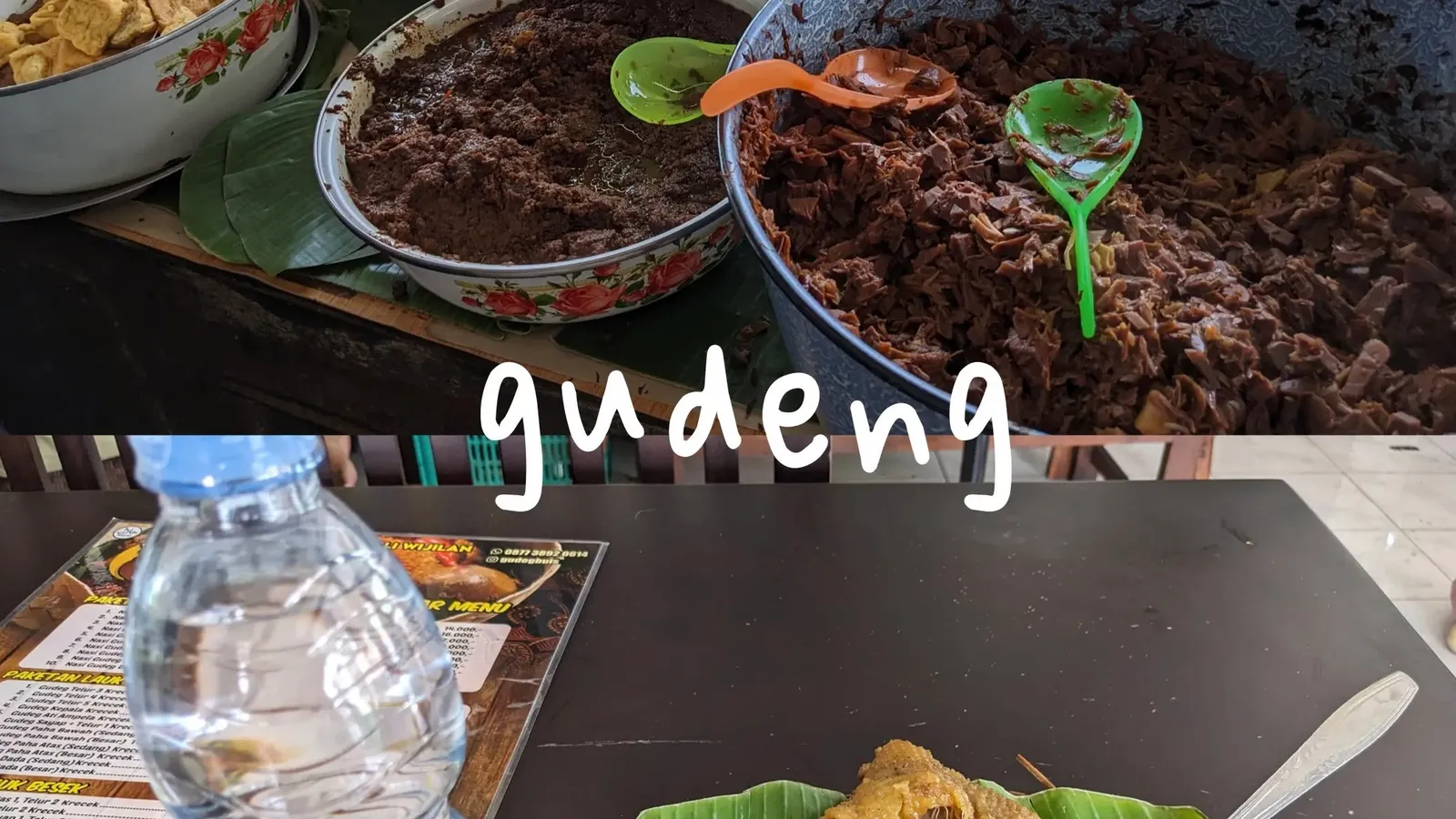
Netflix’s Street Food series has an episode specifically dedicated to the culinary delights of Yogyakarta. Naturally, I arrived in Indonesia with high expectations for a street food adventure. I’ve spent the last few days trying almost everything the locals eat, but I’ve come to a conclusion: some things you only need to try once.
The Pillars of Javanese Rice Dishes
There are two main types of “rice with toppings” you’ll see everywhere in Yogyakarta:
1. Gudeg: The Sweet Soul of Yogyakarta
Gudeg was the first thing everyone recommended. It’s a Javanese specialty made from young jackfruit stewed for hours with palm sugar, coconut milk, and various spices, resulting in a thick, sweet, and dark sauce. You can pair it with beef, chicken, tofu, or eggs, all served over a bed of rice.
Right near my hostel is “Gudeg Street,” and I picked a spot that the staff said was particularly authentic: Gudeg Bu Is Asli Wijilan. There, I met a young girl working at the shop who is currently in university. We hit it off—she told me she’s saving up to travel around Java and even asked me to follow her on Instagram.
2. Rendang: A Spiced Legend

A local friend took me to try Rendang, which features beef slow-cooked in a rich paste of coconut milk and a complex blend of spices. Shops serving Rendang are similar to Gudeg spots but usually offer a wider variety of side dishes, mostly Indonesian fried items like fried tofu or fried bananas. Truly, the Indonesian philosophy of fried food can rival the legendary hotpot culture of China.
I also tried the local Sambal (chili paste) and a side of stewed jackfruit. The former was great with rice, but the latter was a bit hard for me to swallow. To avoid “food traps,” I started asking for the sauces to be served on the side so I could dip as needed. Locals, however, pour everything directly onto the rice and eat with great gusto. One even told me, “If you weren’t here, I’d be eating this with my hands!”
Beyond the Main Course: Snacks and Drinks
Despite the occasionally overwhelming flavors, as someone who loves rice, I’m quite content here. A driver told me that while Java has fertile soil and advanced rice cultivation, Indonesia is the world’s fourth most populous country and eats so much rice that they still need to import some from China.
Must-Try Snacks:
Satay: On the recommendation of a local girl, I tried some Satay (grilled skewers). They were drizzled with a pineapple-peanut sauce. I found a random stall after a Batik workshop and devoured 15 skewers for about 10 RMB. In Yogyakarta, the local soy sauce is incredibly sweet—if it were in Singapore, it would probably get a “Grade D” on the health scale!

Bakso: Meatball soup.
Nasi Goreng: Indonesian fried rice.
Soto: A traditional soup that can be made with chicken (Ayam) or beef (Daging Sapi), often mixed with rice to make a comforting soup-rice dish. You can find these everywhere on Malioboro Street.

You can eat in proper storefronts—where you’ll notice most people take off their shoes before entering—or at “clean and hygienic” street carts and pasar (market) stalls. The taste is usually similar; it just depends on your stomach’s endurance.

The Spice-Infused Drinks
Indonesian drinks, much like those in India, rely heavily on spices. At Pasar Ngasem, a traditional market, a vendor introduced me to a drink made with ginger and palm sugar as the base, with visible bits of cardamom, cinnamon, cloves, and lemongrass floating in the cup.

Before arriving, I had heard that water quality in Indonesia can be poor and that many residents lack access to clean tap water. The warnings not to drink tap water or consume too much ice were firmly etched in my mind, so I ordered hot tea. But drinking hot ginger tea under the 30-degree sun brought back memories of a blind order of Masala tea on a scorching May day in Penang’s Little India.

Co-founder and and lead writer of Yonder Song, covering city culture and practical route design for independent travelers.






Leave a comment
0