

What to Eat in Edinburgh: 5 Must-Try Scottish Foods & Local Spots

When people think of British food, what comes to mind? Fish and chips? Or the infamous “Stargazy Pie”?
If you say that to a Scot, they might correct you: “That’s English food.”
In Edinburgh, you’ll encounter a different culinary identity—food that is hearty, high in calories, boldly flavored, and sometimes a little rough around the edges.
Haggis: From Offal Dish to National Symbol
If there’s one dish that represents Scotland, it has to be haggis.
The word itself may come from Old Norse, meaning “to chop.” Its origins trace back to ancient times: sheep’s heart, liver, and lungs are minced, mixed with oats, onions, and spices, then traditionally cooked inside a sheep’s stomach.
What turned it into a cultural icon, however, was Scotland itself.
The poet Robert Burns even wrote “Address to a Haggis”, celebrating it as the national dish. Every January during Burns Night, people gather to eat haggis while reciting the poem.
There’s even a quirky sport called Haggis Hurling, where participants throw a whole haggis as far as possible.
I had my first taste on a cold morning—in the form of a haggis breakfast burger. It looked like an oversized fast-food burger, layered with egg, cheese, and a thick slice of dark minced meat.

Bonnington Brunch
280 Bonnington Rd, Edinburgh EH6 5BE, United Kingdom
A good stop for a full Scottish breakfast and a memorable haggis burger.
The first bite was intense—rich spices, slightly grainy texture. It didn’t feel like a typical Western burger, but something more rustic, almost with a Middle Eastern depth.
That one burger carried me through an entire day of travel—and helped me understand why this dish exists.
Oink: The Joy of a Roast Pork Sandwich
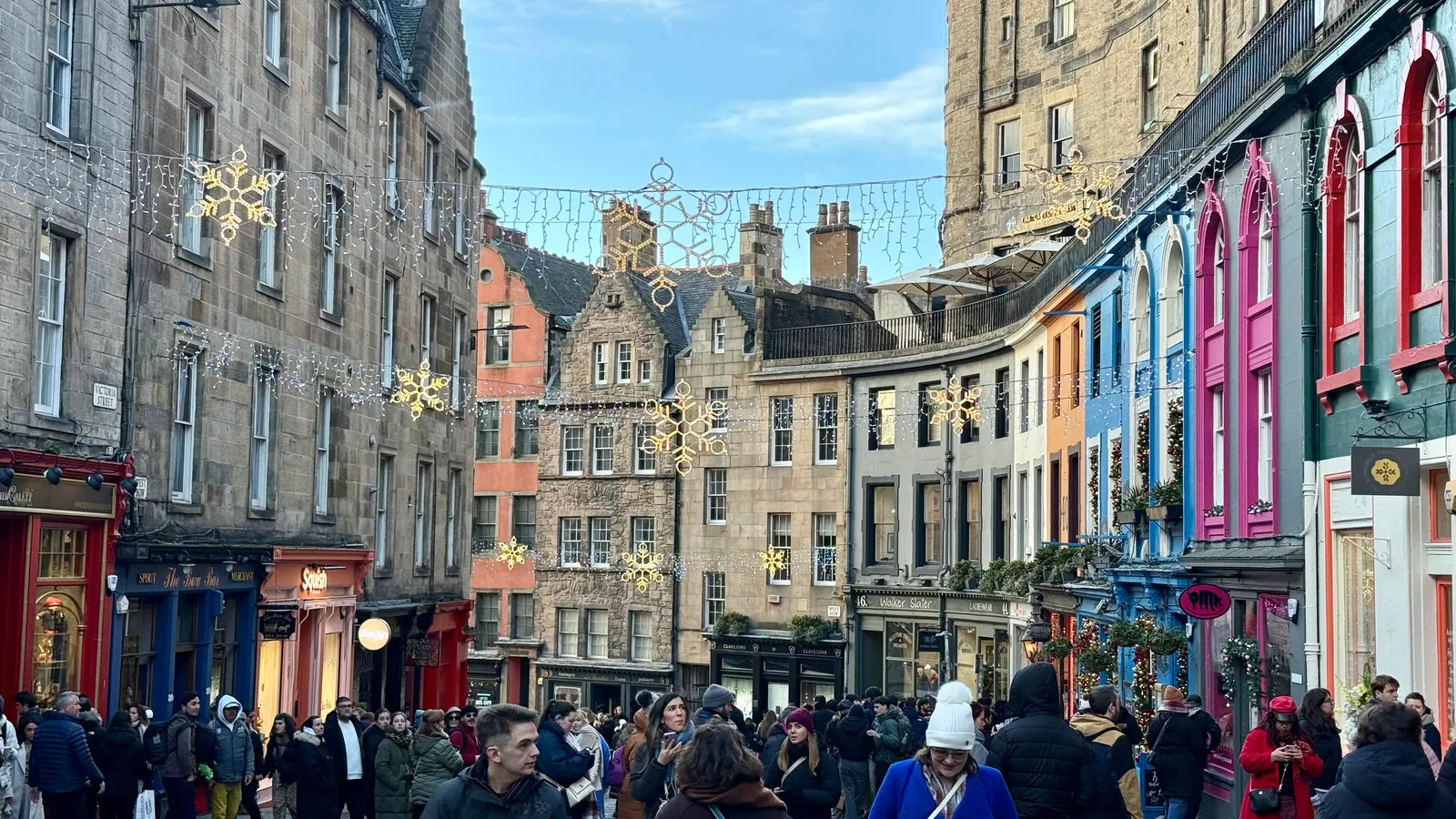
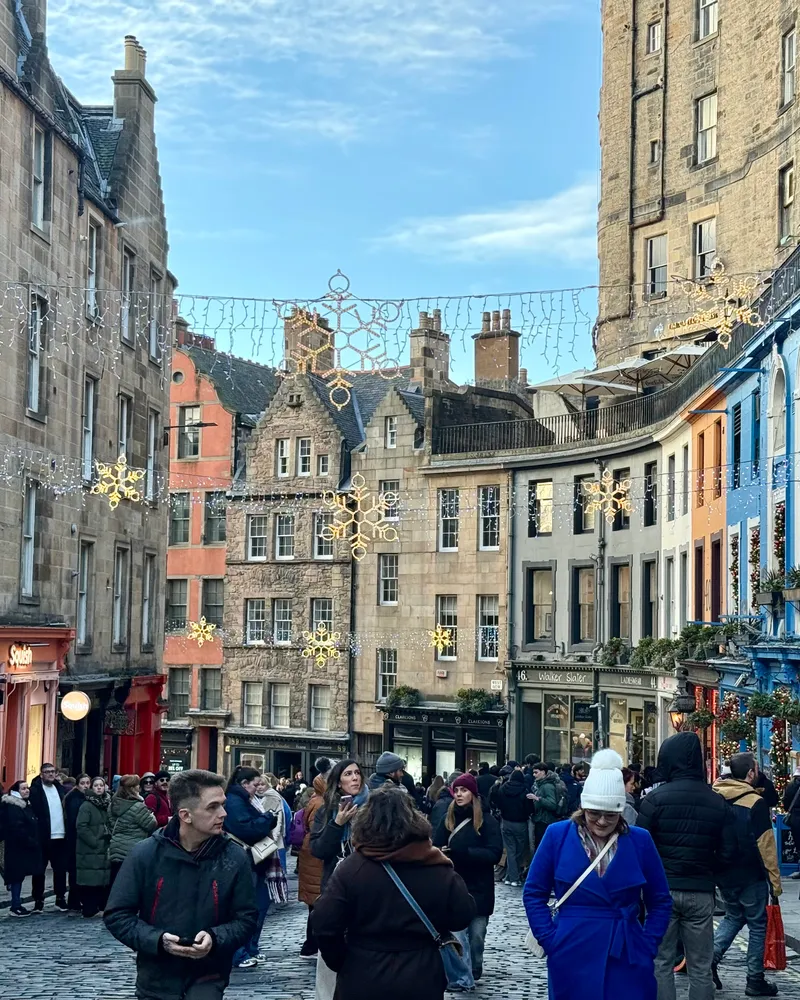
While wandering the Old Town, you’ll likely notice a small shop painted bright pink: Oink.
If haggis represents history, Oink represents the present.
This popular spot serves roast pork sandwiches. The name “Oink” comes from the sound pigs make. Its founders, Adam Marshall and Sandy Pate, came from farming families and started by selling pork at farmers’ markets—quickly becoming a local favorite.
Ordering here is part of the fun:
- Sizes: Piglet, Oink, Grunter
- Bread: white or brown
- Sauces: sage & onion, apple, cheese
- Optional topping: crispy crackling
I chose an Oink size with white bread and apple sauce. The pork is slow-roasted, then hand-pulled into tender strands. The sweetness of the apple sauce perfectly balances the richness.

Oink Victoria Street
34 Victoria St, Edinburgh EH1 2JW, UK
Best for a quick roast pork sandwich while walking through the Old Town.
The Castle Arms: A Classic Scottish Dinner
Near the National Museum of Scotland, I had a traditional Scottish meal at The Castle Arms.
Here, haggis appears as a starter—served with mashed potatoes (tatties) and mashed turnips (neeps), topped with rich gravy.
The main course was slow-braised lamb shank. It’s seasoned simply, then cooked for hours with onions, carrots, herbs, red wine, and stock.

By the time it arrives, the meat is so tender it barely needs a knife. The red wine sauce has fully infused it, adding a slight acidity and a subtle fruity note.
I also ordered a Scotch egg—crispy on the outside, with a soft, slightly runny yolk inside.
As an Asian diner, I always underestimate Western portions. What looks like a “light starter” often turns into a full meal.
The Castle Arms
6 Johnston Terrace, Edinburgh EH1 2PW, UK
A convenient pub stop near the castle for haggis, lamb shank, and other classic Scottish dishes.
Pub Culture: A Way of Life in Scotland
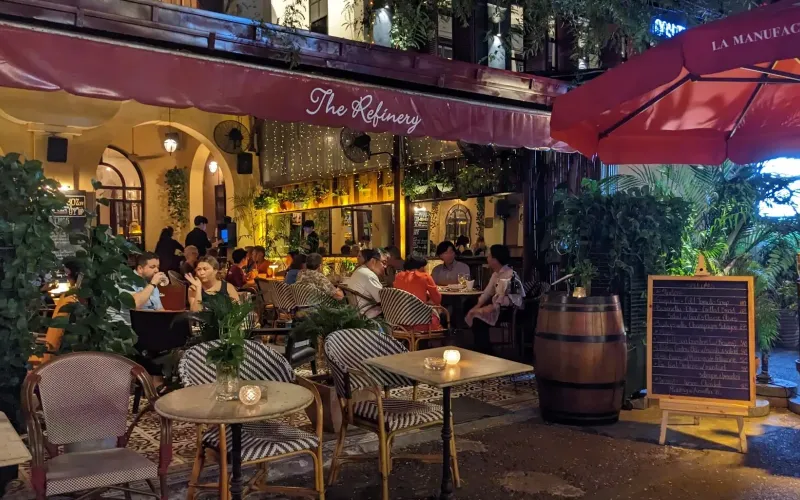
In Scotland, pubs are not just places to eat—they’re part of everyday life.
There’s no need for a plan. People don’t stay in one pub all night—they move from one to another, each stop becoming a new conversation.
Every pub has its own atmosphere:
- Some are quiet and dimly lit
- Others are lively, with football matches on TV
By early evening, locals gather outside with drinks in hand, chatting in the cold air as if time doesn’t matter.

It’s almost impossible to avoid Scotch whisky here.
Once considered illegal and unregulated in the 18th century, whisky only became mainstream after the Excise Act of 1823, which legalized and standardized production.
Today, it’s one of Scotland’s most important cultural symbols.
I don’t know much about whisky, so I ordered a Guinness instead—smooth, creamy foam, with subtle notes of coffee and chocolate.
A Sweet Alternative: The Elephant House
If you don’t drink, there’s another option.
You can visit The Elephant House, famous as a writing spot of J.K. Rowling. Here, you can order a Harry Potter–inspired butterbeer-style drink.

The Elephant House
30 Victoria St, Edinburgh EH1 2JW, United Kingdom
A well-known cafe stop if you want a non-pub option in the city center.
Final Thoughts
Many people say British food is bad.
But after spending a few days in Edinburgh, I realized something about Scottish food: It’s not refined. It doesn’t try to impress.
It simply does one thing, as directly as possible—to fill you up, warm you, and keep you going.
Just like the city itself.
Cold, old, grey—but always carrying a quiet warmth.

Co-founder and and lead writer of Yonder Song, covering city culture and practical route design for independent travelers.


Leave a comment
0